MemoHive and Warfarin: The Interaction to Check First
The verdict in one line
A real, documented interaction in a product aimed at the people most likely to be on warfarin. Our score: 2.9 / 5.
The honest way to read MemoHive is to ignore the headline total and read the split: what the 1,030 mg is made of, and how each part compares with its research.
What MemoHive is
MemoHive is a memory and focus support capsule, 60 capsules per bottle, taken as two capsules once daily. It provides 1,030 mg per serving across five ingredients, every amount printed on the label with no proprietary blend. It is sold on the MemoHive from $49 to $79 a bottle. It is not a medicine, and it is not a substitute for having a real change in memory assessed by a doctor.
The most serious safety point in this formula
Panax ginseng can reduce the effect of warfarin. That is a well-documented interaction, and it matters more than usual here because the audience for a memory supplement skews older, and older adults are the group most likely to be anticoagulated.
Ginseng may also affect blood sugar, which is relevant alongside diabetes medication, and it can add to the effect of stimulants. Neither selling page puts this anywhere near the top of its page. If you take warfarin, tell your anticoagulation clinic before you start, and stop roughly two weeks before any scheduled surgery. A pharmacist can settle the whole question in a two-minute conversation.
Check the current MemoHive price
Bundle pricing on the MemoHive official website runs from $79 a bottle on the two-pack down to $49 on the six-pack, with free US shipping on the larger orders.
See MemoHive Official Pricing Official website checkout · 60-day guarantee · confirm before payingThe label, in brief
| Ingredient | On the label | What the research used |
|---|---|---|
| Branched Chain Amino Acids 2:1:1 | 540 mg | 5–20 g for muscle; no established cognition evidence |
| Bacopa Monnieri Extract | 200 mg | 300–450 mg, 12 weeks; bacoside standardisation not stated |
| Rhodiola Rosea Extract | 100 mg | 200–600 mg daily; trials use a different standardisation |
| Plus L-theanine 100 mg and panax ginseng 90 mg. Total 1,030 mg per two-capsule serving, every amount printed. | ||
The pattern is consistent. No amount is printed for any individual ingredient — the label prints all five amounts — and 540 mg of the 1,030 mg is branched chain amino acids, a sports ingredient with no cognition evidence. The four brain ingredients total 490 mg, and three of them sit below their studied ranges. Full breakdown: how MemoHive works.
Pros and cons
What works
- The brand publishes its five ingredients openly
- It states plainly that ingredient research is not product proof
- Ginger has a genuine human research record
- Simple once-daily liquid, easy for capsule-avoiders
- A simple four-pump routine, easy to keep up
What does not
- Two official sites sell two different products
- Zero ingredient amounts disclosed on either
- 540 mg of 1,030 mg is a sports amino acid
- 3 of 4 brain ingredients below studied range
- The other formula is a caffeine-based weight-loss blend
Who it suits — and who should skip it
Worth considering for adults who want a simple two-capsule daily routine and one bottle a month. Not worth it for anyone with a new or worsening memory problem, who needs a diagnosis first, or anyone wanting studied doses — three of four brain ingredients are below range.
The fact that frames all of this: 540 mg of MemoHive's 1,030 mg — 52% — is branched chain amino acids, a sports-nutrition ingredient with no established cognition evidence.
Bacopa is the ingredient here with the best memory research, at 300–450 mg over about 12 weeks. MemoHive provides 200 mg — and prints no bacoside standardisation, the figure that research depends on.
One habit makes any assessment of this product reliable: write down three countable things before the first capsule — names forgotten per week, times you mislaid something, and a focus score out of ten — then repeat the count at weeks four, eight and twelve, while keeping every prescribed treatment unchanged.
Verdict
A real, documented interaction in a product aimed at the people most likely to be on warfarin. Practically: read the ingredient list on the exact page you are ordering from, ask the seller for a bacoside standardisation, tell a pharmacist what medication you take, get any memory symptom checked by a doctor, start with three bottles rather than six, and diarise your refund decision for day 50. Background reading: NIH Office of Dietary Supplements, and the MemoHive benefit verdicts.
Questions readers ask
Is MemoHive worth buying in 2026?
It is worth considering for its transparency — every amount printed, no proprietary blend. As the 1,030 mg cognitive formula advertised it does not hold up: 540 mg of that is a sports amino acid, and three of four brain ingredients are below studied range.
How long should I take MemoHive before judging it?
Both selling pages say the full effect compounds over 90 days or more, while offering a 60-day guarantee. Plan on 8 to 12 weeks and decide by day 50.
How long is the MemoHive guarantee?
The offer pages state 60 days from the date of purchase. A badge supplied with the product artwork says 180 days, which does not match. Screenshot the written terms on the order form before you pay and diarise day 50.
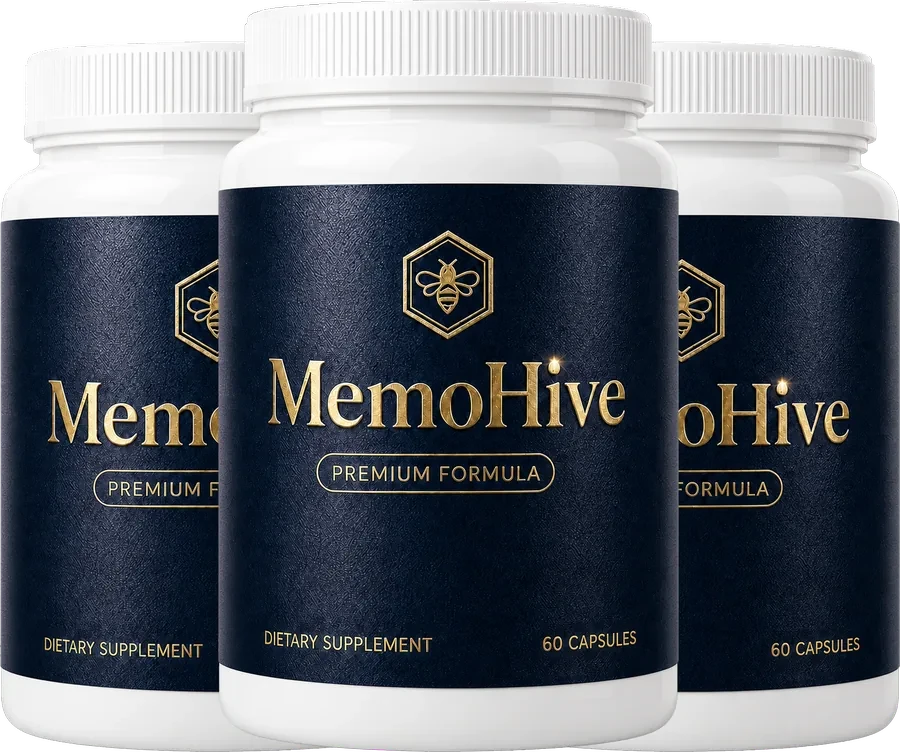
MemoHive Official Website
per bottle on the 6-bottle bundle · free US shipping on 3 and 6
Check Current Price 60-day guarantee · official checkout only