Short version: MemoHive is one of the few supplements in this category that prints every amount on its label. Two capsules give 1,030 mg across five ingredients. The problem is not what it hides — it hides nothing — but what those numbers add up to.
The direct answer
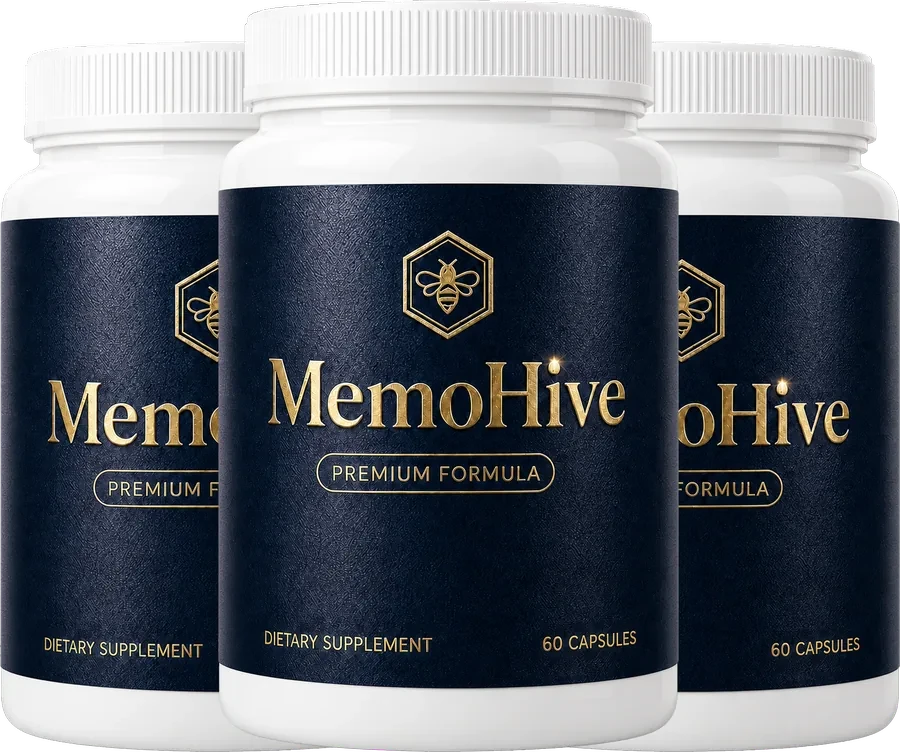
MemoHive is a memory and focus capsule — 60 capsules per bottle, two capsules once daily, 1,030 mg per serving across five fully disclosed ingredients. No proprietary blend. But 540 mg of that total is a sports amino acid, and three of the four brain ingredients sit below their studied doses.
New or worsening memory problems deserve a doctor's assessment before a supplement. Thyroid disease, vitamin B12 deficiency, depression, poor sleep, alcohol and many common medications all affect memory — and most are treatable once identified. MemoHive is not a treatment for dementia or Alzheimer's disease, and the brand says so too.
What is actually in the bottle
MemoHive is sold as 60 capsules per bottle, taken as two capsules once daily with an 8 oz glass of water, 20 to 30 minutes before a meal — 30 servings, a full month. The published Supplement Facts panel gives every amount:
| Ingredient | On the label | What the research used |
|---|---|---|
| Branched Chain Amino Acids 2:1:1 (L-leucine, L-isoleucine, L-valine) | 540 mg | 5–20 g for muscle; no established cognition evidence |
| Bacopa Monnieri Extract (Brahmi) | 200 mg | 300–450 mg, 12 weeks; bacoside standardisation not stated |
| Rhodiola Rosea Extract (golden root, 3% salidroside) | 100 mg | 200–600 mg daily; trials use a different standardisation |
| L-Theanine (from tea leaves) | 100 mg | 100–400 mg; at the bottom of the range |
| Panax Ginseng Extract (Asian ginseng) | 90 mg | 200–400 mg; no ginsenoside standardisation stated |
| Total per serving | 1030 mg | of which 490 mg is aimed at the brain |
There is no proprietary blend anywhere. That is genuinely uncommon, and it deserves stating before any criticism: most competitors in this category would make the analysis on this page impossible.
The number behind the number
The marketing leads with 1,030 mg, which is true. What neither selling page mentions is the split. 540 mg of that total — 52% — is branched chain amino acids, a sports-nutrition ingredient studied for muscle at 5 to 20 grams daily, with no established memory or cognition evidence in healthy adults.
The four ingredients actually aimed at the brain — bacopa, rhodiola, L-theanine and ginseng — total 490 mg between them. That is the figure a buyer comparing cognitive formulas actually needs, and it is roughly half the headline.
Each amount against its research
- Branched Chain Amino Acids 2:1:1 — 540 mg. This is the finding that matters most. BCAAs are the single largest component at 540 mg — over half the headline 1,030 mg — and they are a sports-nutrition ingredient with no established memory or cognition evidence. (52% of the formula of the formula). Studied at 5–20 g daily, for muscle endpoints.
- Bacopa Monnieri Extract — 200 mg. It is the most credible ingredient here for memory — and it sits below the amount the trials used, with the one specification that matters left off the label. (19% of the formula of the formula). Studied at 300–450 mg daily for 12 weeks.
- Rhodiola Rosea Extract — 100 mg. Rhodiola has real research for mental fatigue, but at two to six times this amount — and the standardisation quoted is not the one the trials used. (10% of the formula of the formula). Studied at 200–600 mg daily.
- L-Theanine — 100 mg. This is the closest the formula comes to a studied amount — it is at the bottom of the range rather than under it, which is a real if modest distinction. (10% of the formula of the formula). Studied at 100–400 mg; 200 mg typical for attention.
- Panax Ginseng Extract — 90 mg. It is the smallest ingredient and the furthest below its studied range — closer to a label mention than a working dose. (9% of the formula of the formula). Studied at 200–400 mg daily of standardised extract.
What a fully dosed version would show
MemoHive already does the hard part. These are the changes that would make its numbers match the evidence:
- A bacoside percentage for the bacopa — the figure its entire research base depends on
- Bacopa at 300–450 mg, the amount the trials actually used
- Rhodiola at 200–600 mg, standardised to rosavins as well as salidroside
- Panax ginseng at 200–400 mg with a stated ginsenoside content
- L-theanine at 200 mg, the common attention-study dose
- An explanation for why a sports amino acid is the largest ingredient
- A finished-product trial, or an honest statement that none exists
Who MemoHive genuinely suits
- Adults who want a simple two-capsule daily routine and one bottle a month
- People who refuse to buy anything with a proprietary blend — a fair position, well served here
- Anyone who wants to see exactly what they are taking, even if the amounts are modest
- Anyone treating it as a small daily supplement rather than a cognitive intervention
Who should look elsewhere
- Anyone with new or worsening memory problems, who needs a diagnosis first
- Anyone wanting studied doses — three of the four brain ingredients are below range
- People on warfarin or diabetes medication, given the panax ginseng, without checking
- People taking antidepressants, given the rhodiola, without checking
- Anyone paying a premium expecting the 1,030 mg to be a cognitive dose
Ready to try MemoHive?
Pricing on the MemoHive official website runs from $79 a bottle on the two-pack down to $49 a bottle on the six-pack, with free US shipping on the larger orders.
Check the MemoHive PriceOfficial website checkout · 60-day guarantee · confirm the terms before paying
Why the split matters more than the total
Because it changes what you are buying. A buyer comparing 1,030 mg against a competitor's 600 mg reasonably assumes they are getting more of the same kind of thing. In this case over half the difference is an amino acid that belongs in a post-workout shaker. That is not dishonest — the label says exactly what it contains — but it is the sort of thing a comparison should surface.
Where to go next
See how MemoHive works for the mechanisms and the dose gap, the ingredient analysis for what each one is studied for, and the benefits page for the claim-by-claim rulings. Our overall position is on the MemoHive review.
Questions people ask about this
What is MemoHive used for?
It is marketed for memory, focus and everyday mental clarity. It is a dietary supplement, not a treatment for dementia or any diagnosed condition.
Does MemoHive use a proprietary blend?
No. All five ingredients carry their own printed amount, totalling 1,030 mg per two-capsule serving. That transparency is the product's strongest feature.
How many capsules are in a bottle?
Sixty capsules, which is 30 servings at two capsules daily — one month per bottle.
Why is BCAA in a memory supplement?
That is the formula's central oddity. At 540 mg it is the largest ingredient and 52% of the total, yet BCAAs are a sports-nutrition ingredient with no established cognition evidence.
MemoHive Official Website
per bottle on the 6-bottle pack · free US shipping on 3 and 6
Check Current Price 60-day guarantee · official checkout only